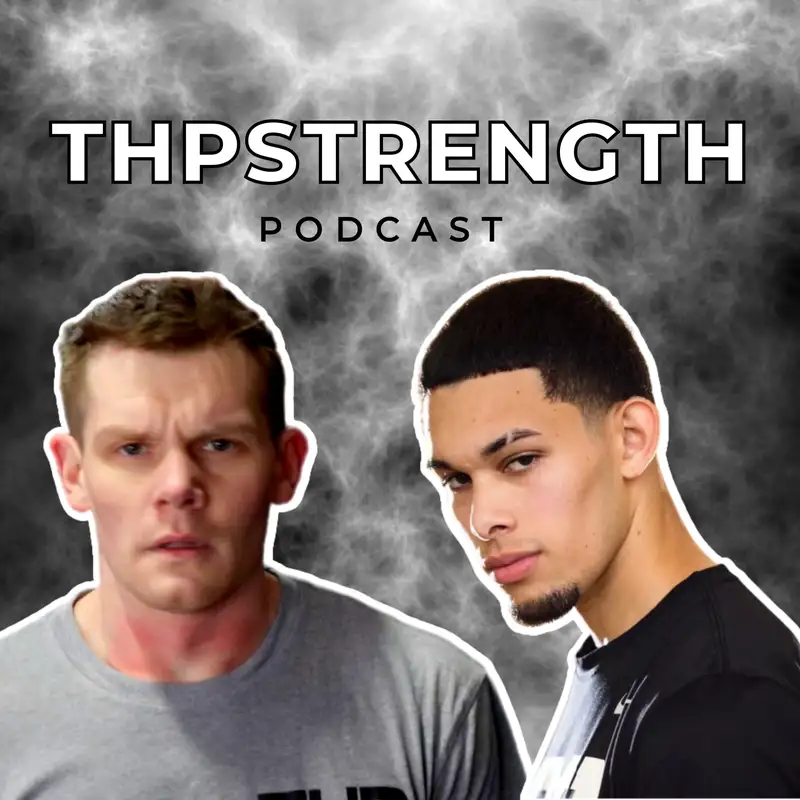
How Often Should You Jump?
Sup, YouTube? My name is Isaiah Rivera. I have a world record 50.5 inch vertical. And today, I am going to be answering your jumping related questions. Alright.
Isaiah:I'm taking these from Instagram. Without further ado, let's get right into it. I'm just gonna get through as many of these as I can until I get tired. How many times a week should I train to dunk? So, when it comes to training to jump higher, there is something called the law of specificity.
Isaiah:And the basic way to explain it is basically, if you wanna get better at something, you need to do that thing more. I always describe it like shooting a basketball. What do you do if you wanna get better at shooting a basketball? You shoot a lot. You put in thousands and thousands of reps and jumping is the exact same way.
Isaiah:If you want to get better at jumping, jump as high as you can with max effort, max approach as frequently as possible and you will jump higher. This is actually what I did to jump higher when I was about 16. I used to dunk four to five hours four to five days a week, two to three hours a day, and I would jump as hard as I could. Usually, would be on low rims. And whenever I wanted to see results, I would take two to three days off from doing that, and usually, would come back jumping the highest of my life.
Isaiah:Now, what are the downsides to doing this? One, you could get hurt. Doing being too specific with your training for too long can lead to injuries, which is why we build in general work. And you want to fluctuate between periods of time where you're doing more general work and more specificity. And what's cool is that doing more general work can actually build your capacity up and your potential to get better gains when you're doing more specific work later on.
Isaiah:And then it also helps you avoid injuries. So that's why we don't just dunk every single day and max out your squat and power clean every single day. It'd be cool if you could, but it'll just lead to injuries. And the other downside to it is that you're gonna reach a point of diminishing returns. So, yeah, you're there's something called training accommodation.
Isaiah:Basically, when you expose an organism to a specific environment, to the exact same environment over and over again, eventually they're gonna stop seeing adaptation and they might actually decrease their fitness level to that environment. That's why you want variety and not to be too specific for too long. Next question, what is my 100 meter dash time? I'm actually pretty slow. Last time I measured it was actually four years ago and I ran it in twelve point one seconds, which is really freaking slow.
Isaiah:And it just shows that jumping high and running fast, although there is a small correlation, just because you jump high doesn't mean that you can't run fast and vice versa. Again, a lot of specificity applies to it. I probably did get faster after that. I did. That was when I was first dabbling and sprinting.
Isaiah:After that, I did, like, three years straight of sprint training, and I probably got that down to somewhere in the elevens. But now, I'm probably slow again because I haven't sprinted in probably a year and a half, two years now. It's kinda crazy. The next question is, does a weighted vest help with bounce? We have not experimented with this with elite athletes.
Isaiah:It could help a beginner, but in my opinion, there are other things that you could do that would be more beneficial. The downside of it is it would probably mess with your jump technique a little bit, but it is more of a strength speed stimulus. So there's something called a force velocity curve. I will look it up. And there are different points along the force velocity curve that different exercises fall under.
Isaiah:So when it comes to concentric muscle contractions, the highest velocity activities are gonna have the least force, and then in eccentric muscle actions, the highest velocity activities are gonna see the highest forces. And then jumping and lifting and all that stuff, they fall somewhere along that continuum. Something like a weighted vest is gonna be more of a strength speed stimulus. So you could theoretically apply it to your training during more specific training cycles and then remove the weighted vest and then do more approach jumps at a later training cycle, and you would hypothetically see a training effect from that. But, again, we don't really mess with that.
Isaiah:We like to use other strength speed stimulus, like loaded barbell squat jumps and that type of thing, and then just keep max approach jumps unloaded. That way, your technique isn't affected. Next question. Wow. There was two weighted vest questions.
Isaiah:This person also asked me if I do sprints. I already touched on that earlier. I had a period of time where I focused on sprints really heavily, and then I took them out the year that I tested 50.5 and I broke a two year long plateau on my vertical. I actually didn't do any any sprinting during that period of time. I do find that it helps with body composition.
Isaiah:So if an athlete has problem, you know, staying lean, it's usually really helpful to to do that. But if you're really active and you do a lot of work on your general days and that type of thing, I I mess around with with not doing sprints. Another reason I don't do sprints is because it messes with my intent during my lifts. So there's benefits and downsides to both. We always something that at THP, we like to experiment with multiple different training stimuli and taking things out, adding things in, and just seeing how we respond.
Isaiah:I am in a pretty interesting situation that I am a one of one as an athlete that has an elite vertical, and there's been no studies on two foot jumpers with 50 inch verticals and seeing different training modalities. So, we like to experiment a lot with my training. We'll add things in, pull things out, see how I respond, and it's kind of just a a never ending case study. That's pretty cool. And we do that with all all the elite guys if if they're up for it.
Isaiah:Let's see. Next question. Shoulder pain. For my shoulder pain, I had really, really bad shoulder pain back in 2021, and I actually started working with John's one of John's best friends. His name is Christian Williams.
Isaiah:He owns Archery Strong, and that's why I refer everybody when it comes to shoulder pain. That's why I refer them to. If you've looked at my upper body workouts and my hypertrophy cycle, it's all programming by him. So, yeah, that's why I refer everybody with shoulder pain. He's like the John Evans of shoulders.
Isaiah:Let's see. I feel like plyometrics are too easy no matter how long I do them. What should I change? I'm actually curious how you were defining too easy. Something with plyometrics is you have to do them with max intent.
Isaiah:If they feel too easy, you're probably not putting in enough effort and that goes with any plyometric including max approach jumping. You have to practice with max intent. That way, you force your body to adapt. Remember, training is just subjecting your body to an environment that it's not used to. That way it can adapt and become fit enough to handle that environment.
Isaiah:When it comes to plyometrics, you go max intent, you overload your tissues, your brain basically goes, woah, we need to make this organism's nervous system more efficient. We need to have his muscle fibers fire more quickly. We need to have them fire with more force so they can stretch the tendon more so that he doesn't DIE. I don't know if I can say that on YouTube. That's what your brain's doing.
Isaiah:So, with plyometrics, what's really cool about them with any plyometric activity is that if you're doing it with max intent, you're going to get better at them, and then it's gonna self intensify. As you get better, guess what happens? Your technique gets better. So you eccentrically load your muscles more. You land from higher heights, which also loads your muscles eccentrically even more.
Isaiah:What happens when you load it up eccentrically even more? The stretch reflex becomes even greater. Right? There's less inhibition from I believe it's it's your Golgi tendon. I might be wrong on that, but there's less inhibition from there.
Isaiah:So you're able to stretch your muscles even stretch your tendons even farther and your muscles even farther. And then what happens when you do that? The concentric force goes up because of the stretch shortening cycle. So, every everything becomes even greater, and then you jump higher, and then everything gets overloaded even more, and your body just keeps adapting and adapting and adapting. That's why frequent jumping helps.
Isaiah:Jumping every day. That's why it's so effective, and that's why plyometrics are effective, but they're only effective if you're trying as hard as you can. So if you're not seeing results from plyometrics or jumping, it's probably related to your effort level. And then, it could be related to just the volume and intensity that you're doing them at. Next question, how did you start practicing meditation?
Isaiah:So, if you guys did not know this about me, am an avid meditator. I do it every single day. It is one of the things that I recommend every single athlete do, and it's one of the things that I attribute to my success, my ability to stay disciplined and stay consistent with my routines and my workouts, and my ability to just handle suffering. A lot of training is just how much suffering can you handle. And the more suffering you can handle, the more progress you're gonna be able to make.
Isaiah:And meditation allows you to be able to handle more suffering. It's more it allows you to accept suffering and just the way things are without having to change anything about your experience, your exterior experience. How I started meditating. It started if you guys know who Austin is, his Instagram is at austin burke a insane one foot jumper. Has a 40 I think 45 to 47 inch vertical off one and then mid forties vertical off two as well.
Isaiah:And I was roommates with him for a while and he was really into studying just like spirituality, eastern philosophies, all that type of stuff. And then he put me on to an artist called XXXTentacion. And he read this book while he was in prison called the master key. Austin gave it to me. And in there was basically just exercises.
Isaiah:It was like a lesson. You have to pass each lesson. And it was essentially meditation. So that was kinda like my introduction into just sitting down and just meditating, sit there. And, I remember the first lesson would just sit there for thirty minutes still.
Isaiah:The next one was sit there for thirty minutes and try not to think. From there, I read a book called The Power of Now by Eckhart Tolle. And then, that blew my mind and taught me the importance of just being present, not being stuck in the past or the future. Then, I moved from Florida to Twenty Nine Palms, which is a military base. My wife was in the marines, and I literally had nine hours during the day of doing nothing.
Isaiah:Super boring place in the middle of the desert. And that's when I really got into stoic philosophy, the spirituality, how to train your mind. I read another book called Be Here Now that was really inspirational. Then I bought another book called Mindfulness in Plain English that taught me the basics of meditation. And then from there, I just started a meditation practice, found an app called Waking Up by Sam Harris, read his book, and then that was just a whole another just paradigm shift on on how I view the world.
Isaiah:And I've literally been having a meditation practice at least ten minutes a day every single day since then. I think it's been three years now where I've been doing it consistently. I've only taken a month break in there on purpose just to see how my mind responded to not meditating. But, yeah, I do it every single morning for ten minutes, and it is one of the most important things that I do every single day. Alright.
Isaiah:For how many hours did you start jumping a day when you first started training at 16 to 17? I referred to that earlier, but it changed over time. So I started, you know, two to three hours on average. It could be up to as far as four hours on some days, and it was almost every single day, probably average around four to five times a day a week. And then from there, the volume just slowly decreased.
Isaiah:I do think that is not sustainable once you start jumping higher and higher. I think it's one of the most important things a young athlete can do. They haven't started going through puberty yet or in the beginning of it as long as you build up to it. But once you start getting stronger, being able to produce more force in jumping higher, the toll it takes on your body. How high you jump can far outpace the capacity of your tendons to to bear that load.
Isaiah:Tendons don't like rapid changes in load and you can progress so fast by doing that that it's impossible. Even if you're careful with your jump volumes, they have to decrease over time as you become more proficient because the forces that you're putting your body body under. So over time, that changed to about two to three times a week because of knee pain. Sessions always stayed at about two and a half hours on average, and then it just slowly decreased. Now that I the outputs I'm putting out are insane and I'm training hard every single day.
Isaiah:If I wanna stay healthy, my sessions are like forty five minute. Like, thirty to forty five minutes is perfect. Hour, hour and a half is usually how it goes and that's usually I'm pushing it. I'm like riding the coattails of of pain if I'm doing that. So that's kind of an overview of how my jump volume has has changed over time.
Isaiah:How to minimize getting your ankles injured? So this is this is a good question, especially since I just sprained my ankle playing basketball two weeks in a row. The way you train your ankles is by playing the sport that you're trying to prevent the the ankle injuries with. And you just have to go as long as you can without spraining your ankles as bad as that sounds. There are things in the in the weight room that you can do.
Isaiah:The my favorite exercise, anything that trains the lower leg, specifically seated calf raise and single leg barbell calf raises are really good for strengthening your ankles and just avoid just anecdotally, they've helped me avoid ankle sprains, and I've rolled my ankles before and been completely fine. Even these ankle sprains were pretty bad, and I was able to play and dunk the next day. I think the next day I just went and played dunk course and all I had done was seated calf raise, train like I did. And as long the the most important thing with ankle sprains and this goes with any injury is just make sure you're tracking. Every morning track exactly how you feel as soon as you wake up.
Isaiah:If you are feeling better day to day, you know you're on the right track. If it got worse, that mean you did you pushed it a little too much or you didn't do enough. So track every single day, train. It's okay to train through a little bit of pain. Usually about a two or three out of 10 pain is okay for for ankle sprains.
Isaiah:And as long as your tracking is getting better, you're gonna make a lot of progress. The biggest mistake is athletes just don't do enough. They they feel like they just need to rest completely. But motion is lotion, baby. Alright.
Isaiah:How much difference can there be between a good run up and a perfect one? So, assuming an athlete is training both their standing vertical and approach By that, I mean, they're putting in reps of both. I think close to a foot is probably the the biggest difference there can be. My approach let's see. So I tested 40 recently, and then I tested that standing, 40 standing, and then I tested a 50.5 running.
Isaiah:So that's a about a 20% difference. So I would say that's about as efficient of a of a run up that you can get. You can probably get a 20% increase in your vertical from your standing jump if you're practicing your standing jump a lot. If you don't do any off vert dunks at all, it can actually be higher. So my off vert used to actually be 37, and I had a 50.5.
Isaiah:So that's a that's a 27% difference. But that's purely because I didn't practice standing jumps. I I feel like if I were to practice them consistently, then that difference would would close out a little bit. And then there's obviously there's gonna be differences too based on your genetics and your tendon properties. So someone with more compliant tendons are gonna be able to stretch them more, and they're gonna be able to get more out of their approach without as much effort.
Isaiah:And someone with super stiff tendons that is strong enough to stretch them, you're not someone with stiff tendons, if you put in low effort or a low approach, they're probably not gonna jump very high. But as soon as you add an approach and they're able to eccentrically load their muscles enough to stretch that tendon, they're gonna get a ton out of their approach. So can vary a lot depending on genetics. Alright. How often should you train plyos and how many rest days?
Isaiah:It all depends on your resilience as an athlete. Generally, training should go from more general to specific. During more general periods of time, you should be jumping less. It should be more general work in the weight room, full ranges of motion on your lifts. Probably jumping once a week.
Isaiah:And then the most, if you are injury prone, the most that I would jump, as long as you build up to it, is about twice a week. And then, you are a very healthy athlete, like no history of injuries and you're young, full approach jump as much as you can, as long as you build up to it and you're able to handle it on top of being on lifting and stuff like that. And, just have fun with it. If you feel like going to go dunk, go dunk. Again, just make sure it's within reason and what you're capable of.
Isaiah:The biggest mistake to make when doing this is doing something that you haven't typically been doing. So, if you haven't been jumping every day, don't just all of a sudden go out and jump every day. Start with once a week, twenty minutes, and then add a little bit of time. And when you've can do an hour long session, maybe add an extra session, five minutes, ten minutes, and increase the time. And then also start lifting.
Isaiah:Right? And start with a baseline level and work your way up. At THP, we typically program just one day a week because that's what we have found is the most safe for athletes where you can still make a lot of progress, you still have energy to be able to go lift in the weight room. And then the other one we program really frequently is twice a week as well. But anything past that, it's a little bit risky, but if you're young, completely healthy, you can definitely jump more frequently than that.
Isaiah:Alright. High calf equals high vert without jump training. I'm not sure what you're asking. I'm assuming you mean if your calves get stronger, do you jump higher? Yes.
Isaiah:Any muscle group that is specific to jumping higher, if you increase your ability to generate force, your strength in that muscle, you're gonna increase your potential to jump higher. As long as you periodize it properly and do more specific things later on, you're gonna actualize that potential into vertical jump height. So what muscles are muscle groups specifically? Are specific for jumping higher for two foot, quads, your glutes, your calves. They're gonna be the main muscle groups.
Isaiah:For one foot jumping, same ones, quads to a lesser extent, more hamstring, more glute. Alright? So those muscle groups, the most specific ones for jumping higher. If you get those stronger relative to your body weight, it's almost guaranteed you're gonna jump higher as long as you're doing plyometrics and or practicing jumping frequently. Well, as long as you're doing that and doing max approach jumps frequently and or plyometrics.
Isaiah:What is the single most effective workout to do to get a better vert? So, if there was only one thing that you could do and nothing else, it would be max approach, max effort jumping. Is a 60 inch vertical possible? I personally don't think it's possible. What I think is within the realm of possibility for a human is probably mid fifties.
Isaiah:Fifty fifty four, 55, I think that's in the upper echelon of what could be possible for a human. Some tips for back pain. I have pain in my back for around a month, and I'm a volleyball player. So, first, find out what triggers your back pain. Is it flexion?
Isaiah:Is it extension? Sitting for too long? Standing for too long? Going side to side. Find what it is that is the pain trigger, and then remove that pain trigger completely, and don't test your back pain.
Isaiah:That's number one. Once the symptoms calm down, you can start doing McGill Big three, one minute each. Alternatively, you can just choose the one McGill Big three exercise that is the most analgesic for you. Just do that every three times a day. I do as soon as I wake up, and then go and take three fifteen to thirty minute walks at a brisk pace every single day.
Isaiah:That's gonna serve as nerve flossing. Do that until your back feels pretty resilient. You can hold those positions without it hurting for about a minute, and then you wanna start adding the provocative stuff in very slowly. You wanna get really strong in any lift that requires bracing. So that can be squatting, front squatting, any leg movement, hip thrust, anything in the weight room, just make sure to stay braced, keep the spine locked, don't flex or extend under load, and then over time you can go heavier and heavier and heavier.
Isaiah:Continue avoiding those pain triggers, listen to next day pain, and you will make progress. Are power cleans or hand cleans more effective for training for an athlete? There isn't anything inherently special about one exercise or the other. There is a time and place to do everything. A power clean is gonna be less specific for one foot jumping in this case, and then a hand clean is gonna be more specific for hand clean.
Isaiah:Does that mean you should do hand cleans? No. Being able to power clean well, take it even to even more general. Being able to clean pool heavy is gonna increase your potential to power clean, which is increase your gonna increase your potential to hang clean compared to if you just had just done hang cleans. So, time and place for everything.
Isaiah:It's all a continuum, and you need to surf the entire continuum. Think of the exercises as a continuum as they each fall on the continuum of the force velocity curve, and you have to surf the whole curve if you wanna reach your athletic potential. There's things that help beginners. Right? When I'm saying to jump higher and reach your potential, I'm talking reach your genetic potential long term.
Isaiah:What's gonna help you compare year zero to year 10? What could you have done to be jumping your highest at year 10? I don't care about year zero, year one, year two. You can do anything and improve your vertical at year zero, year one, year two. But can you increase your vertical at year five, year six, year seven?
Isaiah:That's where this stuff comes in. Because you could do just hang you could go jump every day and squat three sets of five, dead lift three sets of five, power clean three sets of five every other day, jump twice a week for thirty minutes. Your vertical is going to go up. But, that's because you're a beginner. What I'm concerned about is what makes elite athletes elite?
Isaiah:How can you reach your genetic potential? Your max maximum ceiling that's up here somewhere. How can you get as close to it as possible? That's what THP is concerned with. Okay?
Isaiah:Which by the way, if you wanna get coached by us, if you wanna reach elite levels of athleticism, thpstrength.com. I don't know how many how many more of these I should do. I think that's actually a good a good place to cut it. How much time? How much time am I at?
Isaiah:Oh, yeah. Twenty four minutes. Let me know if you have any questions. This was really fun. I'm gonna continue doing these on my general days because nobody wants to watch my boring ass freaking upper body workouts.
Isaiah:So if you enjoyed this video and found it helpful at all, you learned anything, like the video and then leave a comment below. That way we can start some cool discussions. I like to respond to comments that are, you know, informative, that add value, that are have cool insights, funny comments, all that stuff. I like interacting with you all. So if you have any of those insights or comments, leave them down below.
Isaiah:And I will catch you guys tomorrow on day 23 of the hypertrophy cycle. Last workout of my deload week, and then it's dunk session. Probably gonna be a crazy one. Just warning y'all. Catch you guys in the next video.