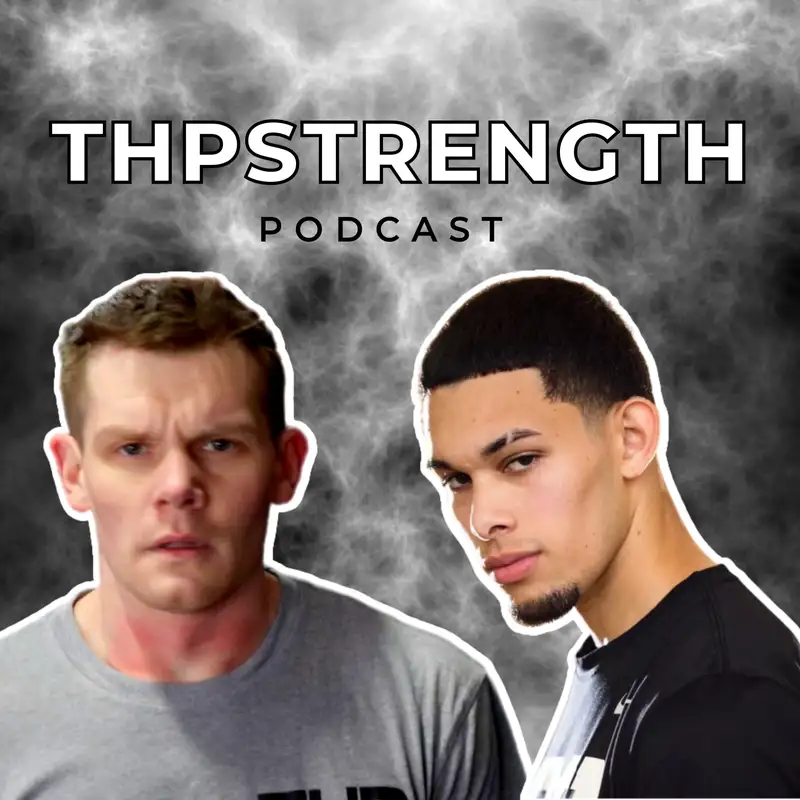
How Important Is Deadlift For Jumping Higher?
What's up guys? Welcome back to another THB strength podcast. On today's episode, we are gonna be talking about how important is deadlift for improving your vertical leap. But before we get into that, I wanna give a huge shout out to our sponsors over at THB strength. Yes.
John:We know that we are our own sponsors. That is the joke. Every time someone's like, you can't sponsor yourself, like, we absolutely can. And we just did. So if you guys are looking for the best jump training in the entire world, go to thbstrength.com and sign up today.
John:Right now, we are running a sale that is currently what percent cheaper than what it used to be?
Isaiah:I think it's like 80 something. Yeah.
John:80 something percent cheaper. And prices are definitely gonna go back up. So if you wanna get in on this, a big motivation and inspiration for me was trying to help kids like me whenever I was in high school or even in college and and didn't have the funds to get high level coaching. Still made it work at the time, but I wanted to help kids like us when we were kids. So that said, we'll get into it here.
John:How what do you what, Austin?
Austin:I think we think we should give them a discount if they're a little weary.
John:If you're weary? A discount. What's the discount?
Austin:Think we should give them 10% off their first month with the code THP at checkout.
Isaiah:That is a good idea. Right?
John:Wow.
Austin:Shout out our sponsors.
John:Okay. So Isaiah, we did this what? How many years ago do we do this this podcast? Three years ago? Two years ago?
Isaiah:Two years ago.
John:And it was a hot topic on my channel. It was something that we felt played a big role into your performance in getting 50.5 at the time because we had a lot of dead lifting leading up to that first testing period. And then obviously your TFL was damaged in last all star weekend. So it's been, I don't even know, fifteen months since that happened. Yeah.
John:And you retested 50.5. So for you, now that you've done it again, you're in a new position, how important do you think deadlift is to your vertical improving at this point?
Isaiah:Definitely been a correlation. I tested so I recently PR'd, and then I had Wait. When did you PR? What was it? That was a month and a half ago.
Isaiah:So I wanna say when was that? Feb very February. And then I PR'd my deadlift again, like, three months before that, 500. It was 20 pound PR, without even training it, funnily enough.
John:Wait. When we were at twenty four hour?
Isaiah:Yeah. You remember that
John:day? Yeah. Yeah. That was in that was the that's the most recent one? Or did you okay.
John:That's what I thought. That's what I thought. And that's a good tech, like, with good technique.
Isaiah:Yeah. Yeah. I could've deadlifted probably five, like, five fifteen or something like that, maybe 10 pounds more. So Okay. There's been a correlation for sure.
John:Alright. Awesome. What about you? Has deadlift helped you your two foot or one foot?
Austin:I wouldn't say I noticed a direct correlation for me personally.
John:Wait. What is your deadlift?
Austin:I actually so last time I tested my deadlift was probably 2023. I think I got four something. When was it? Was here. Right?
Austin:Was, like, 04/04/2005? I think so. Yeah. It was, 04/2005.
Isaiah:Okay. Might have been 04/25. Really? Yeah.
Austin:I haven't done that in a while,
John:though. So I don't really deadlift. I think the most I've ever deadlifted is March or something like that. Bear maybe barely. And that was in 2017.
John:I really don't do deadlift. I struggle to pull from the floor. Since And I do so many clean pulls, I don't really see a point in deadlifting super often. That said, I do a lot of RDL as an alternative, which is slightly different, but similar in the sense that you're doing a lot of hinging. It's very hip hamstring dominant.
John:Depending on your deadlift technique, you could have a more hip dominant one or a more knee dominant one. Basically, how high you have your hips in the setup is gonna determine that versus how low your hips are. If your hips are higher, you're gonna load the hip and hamstring more. Some guys will kinda start high, roll the knees forward, and then stand up. Some athletes roll the just round their low back.
John:I stop myself from swearing. You proud of me? And they just round their low back, and then they can lift a lot more too. I obviously don't don't believe in doing that. I think that it's really detrimental.
John:You hear a lot of guys talk about how deadlift is one of those cost benefit relationships where it's like, how much benefit do you have from this as an athlete? And I I kind of stand by that. I think it it is true. I do believe that if you deadlift too often too heavy, you're probably gonna have a lot of setbacks. I mean, realistically, we have not deadlifted much with either of you guys in the last two years.
John:Right? Yeah. And your deadlift has gone up from just pulls. Yours as as well. We don't even do that.
John:We just do clean pulls.
Austin:I should definitely be on my deadlift right now. What do you
John:think you could pull?
Austin:Probably, I would say about four fifty based on clean pulls and stuff. Would say
John:probably do like Four fifty?
Austin:Four sixty somewhere in there. What do think you
John:could deadlift, Isaiah, right now?
Isaiah:Right now? It it's always so weird, though, because I have, like it it depends on how much I let my form break down, which is actually the main reason I don't like dead lifting much is is really easy when you're doing maximal weights to let your technique break even if it's just a little bit.
John:And you see that that really negatively impacts your health. Right?
Isaiah:Yeah. Yeah. Deadlift, I've I have seen to be really good for my back health if using lighter weights and extremely strict with technique. But as soon as I start doing maximum weights, it's always messed my back up. Always, always.
John:Okay. So here's a good question. What do you think has been more helpful? Deadlift or power clean for your vertical?
Isaiah:Power clean for sure.
John:Yeah? Yeah. What about you, Austin?
Austin:Same.
John:Power clean. Are you done doing can you hold the mic now? Oh, yeah. You can take the mic.
Austin:I could I'll take it.
Isaiah:Well woah.
Austin:Here. Take it back.
John:Okay. We'll just go back and forth. Well, I do. I agree with that. I think power clean has definitely made a bigger impact on my vertical.
John:I mean, now that I've started doing two foot, I'm I'm not really sure. I'm kinda curious. Oh, that's a butterfly.
Austin:Look at
John:that. It always catches our attention, all of us.
Isaiah:Is it the same So we live at the
John:same time. Same time. It was like, you like that butterfly? Yeah. I I do think that deadlift has a place for a lot of two foot jumpers.
John:I think that it can be really, really beneficial. But I definitely do you wanna grab the other pad too? Are we gonna now we gotta adjust the camera. It's just better if
Isaiah:you Okay. Oh, okay. It's just
John:better if you don't.
Austin:Okay. So How much tall is that? Xerxes. Jerksy.
John:You want Uppy. Oh,
Austin:he looked like Xerxes in 300. That was that was that was my thing.
John:That was the reference? Okay. I do think that it has a lot of benefit for health. I mean, in terms of your back health, what is it? You feel like it correlates quite a bit.
John:Right? When you can pull from the ground heavy in dead lift without a flare up, your back is usually Pretty healthy. In a better position, your resilience and stuff like that. Do you feel like getting better at deadlift has helped your back increase its resilience?
Isaiah:Yeah. For sure. Like, when I use it post flare ups, it's been a really good tool to get me back into being able to squat and exercise pain free.
John:So what advice would you give to someone who has back pain but wants to deadlift for performance or health?
Isaiah:Well, number one thing is learning how to hinge properly. If you know how to hinge properly, the deadlift kinda helps you get stronger while being able to brace, and it just grooves that motor pattern of bracing properly. If you can deadlift two twenty five for reps off the ground with perfect technique, and then you apply that to your day to day life, like staying braced, picking things up from the ground, You can get a lot better pretty quickly. That's also one of the downsides to deadlift. It's a lot of people don't have the mobility for it.
Isaiah:They don't know how to hinge properly. So I think a good starting spot is learn how to RDL actually. Then through RDL is how RDLs are a really good way to increase your hamstring flexibility. I think hamstring flexibility is the main reason guys can't really get into that position from the floor or
John:I think it's that or like hip mobility. Like, if you have bony impingements, like, can't. I I would have to sit like this and pull from like Yeah.
Isaiah:So I would say if it's a hamstring flexibility issues, do RDLs and see if you're flexible enough to pull from the ground. And then until then, pull from blocks. And then if there's pinch a pinching sensation in the hips, you're basically you just always have to pull from the from the blocks. And there's alternatives to that. Like, we could pull from these.
Isaiah:You can stack plates up. You can actually get blocks, like weightlifting blocks.
John:What about what about Sumo deadlift? How do we feel about Sumo deadlift? I know I have an opinion on this actually, but I wanna know what your lens is because I've had you
Austin:Well,
John:for me I programmed it once.
Isaiah:For me personally Me personally? I they are horrible for my hips because I have I get pinching my hips with external rotation. It's kinda like the opposite problem that you have. Sumo deadlift is like, it just tears my hips up. Tears tears my hips up.
Isaiah:So I don't really like doing it. I think if you're healthy enough to do it, it's just another tool in the toolbox to source a variety in your training that you can use.
John:I agree. I agree. I don't think that in terms of specificity, either of them are that specific, sumo or conventional. I do like the neural aspect. I do think that it is an incredible neural stimulus, but there's other ways to do that.
John:Especially if you do have some prevalence or some history with back pain. I'd rather pull off blocks. I'd rather pull from a more comfortable position to still get that stimulus. Yeah, the muscle length is not quite the same in those positions, but obviously you can't jump at all if you have crippling back pain. There's no point in trying to lift super heavy if it's gonna set you back because
Isaiah:we're not power lifters. No. There isn't there our sport isn't constrained by being able to squat below parallel or having the mobility to be able to pull from the floor. That's not the sport. Now if power lifting is your sport and you're also trying to jump higher, that's a little different.
Isaiah:But that's actually a big issue that I have with strength sports is not a lot of people are able to do it. Like, to be an Olympic weightlifter, like that caliber of lifter, and to do it safely, you essentially have to have short femurs, long torso. Yeah. And if not, you're you're gonna hit a
John:a limit very pretty gonna difficult.
Isaiah:Yeah.
John:Okay. So here's what do you guys notice when you look at athletes who do have a really, really high deadlift that we've coached in the past or other athletes that you've seen that have really high deadlifts in terms of their athleticism? What do you notice? Conventional deadlift. I see almost no correlation with it.
Austin:There's like a few guys that would come to us with like a 600 plus pound deadlift and stuff, and they have but they can't get off the ground at all.
Isaiah:Yeah. I don't know Neil Gannon has a big deadlift. Like, that's like.
John:Yeah. But that was an after. Like, his deadlift is after he was already jumping Mhmm. A lifetime. It wasn't like he came with a big deadlift and then could jump high.
John:Whereas, like, some Olli lifters that come to us, they naturally have, like, a little bit more bounce. But honestly, the player the guys that come to us that typically have the best verticals are basketball players. Basketball players, sometimes volleyball players, but, like, basketball players generally have
Austin:Yeah.
John:The best verticals or and have a lot of upside. Like, seems to be like if you have a background in in strength sports, you're actually worse off than someone who has a background in basketball going into dunking. Right? Like, because now you're way stronger, so all the percentages are heavier. Right?
John:You have no jump technique. You're probably not coordinated with a ball in your hand, and we have to teach you how to do all that stuff. And you're like, well, I thought the training was just gonna magically do it. It's like, well, you have to take some ownership over the fact that, like, there's a skill here. There's a skill component, and you have to master it.
John:You gotta work on it a lot. So, like, yeah, you can still you know, and some people might just be like, well, there's a massive deficit there. Why don't you just jump or something else? It's like, well, you gotta stay healthy. You still wanna get stronger.
John:You still wanna get more powerful. But I'd rather have the basketball player.
Isaiah:And I've noticed
John:comes in that is weak than the dead lifter that comes in that's unathletic.
Isaiah:Yeah. And I've noticed that focusing on that, like, guys that generally focus on dead lift, think, are just too obsessed with the weight room. I know we've said before, get obsessed with the weight room, but that's because ninety percent of athletes don't have that obsession necessary to have good technique and stuff, but then at the extreme end, the guys that are like that's all they've been doing, it's way harder to train and they're usually more injury prone too. Like guys get that are obsessed with their deadlift are usually like, they have a lot of back issues and that and that type of thing. And I've actually seen on the dunking side of things like pro dunkers, when guys get really obsessed with power lifting and stuff like that, like, eventually injuries start start creep creeping in.
Isaiah:Like, I'm thinking, like, Tee. Like, he I think he was hurt for for a big part of the last, like, two, three years.
John:We used to think he was indestructible.
Isaiah:Yeah. But eventually, you hit a limit. Yeah. Yeah. No idea.
Isaiah:Yeah. And then I think Jay Clark too, when he got really inspired, like, got trying to get his squad up to, like, 500 and stuff like that. I know he he had some, like, issues creep up and stuff. So, yeah, combining power lifting and and dunking, think, is, like can be beneficial if you're a noob and, like Freaking noob. Yeah.
Isaiah:Like, you you increase your max strength, and your vertical will fly you up. But, like, as soon as you start be as soon as you start placing more importance on that than jumping and dunking and sacrificing your health for it, a lot of issues can happen.
John:Alright. I feel like we've we've covered this pretty thoroughly. So in conclusion, if you wanna deadlift, go for it. But remember that dunking and being an athlete is the end goal and being healthy is more important. We do think deadlift has some benefit, especially for the hips.
John:It obviously depending on how you lift that can change what it's gonna load and you probably don't want to load that too heavily if you're doing a lot of pulls from the floor already because that's gonna tax your back. And I
Isaiah:think finally is use good technique.
John:Yeah. Learn how to Have good technique.
Isaiah:Learn how to how to brace properly, not flex up the spine.
John:Anything else? Talk.
Austin:Well, I am talking. I didn't have the mic. Just kidding.
John:Yeah. Well, yeah. Maybe not.
Austin:No. It's fine.
Isaiah:Oh, it's over by the way. I don't actually
Austin:No.
Isaiah:He no.
Austin:He does. He talks. Help. Help. It's my cry for help.
John:Anyways, go to teachmestrength.com if you wanna get coached by the three of us. We are the premier jump coaches in the entire world. This is not overhyped. We are good as shit at what we do, whether it is knee pain, back pain, hip pain, PFP, condomalacia, telotenopathy, quadenalopathy, doesn't matter. You can come to us and we will help you get healthy.
John:And then obviously, all of us are jumping high and continue to jump higher. Anything else you guys wanna add?
Austin:Oh, I don't know if you guys heard this before, but if you're weary, get 10% off your first month with the code THP. Mhmm. And I'll repeat. It's THP. Should I do it one more
Isaiah:time? Yeah.
John:THP. Alright. See you guys.